Is The Road To Chillagoe Sealed? Self-Drive Or Tour
The road to Chillagoe is sealed as far as Almaden, then the last stretch of about 32 km mixes sealed and unsealed sections. Here is what that means for a self-drive day trip versus taking a tour from Cairns.
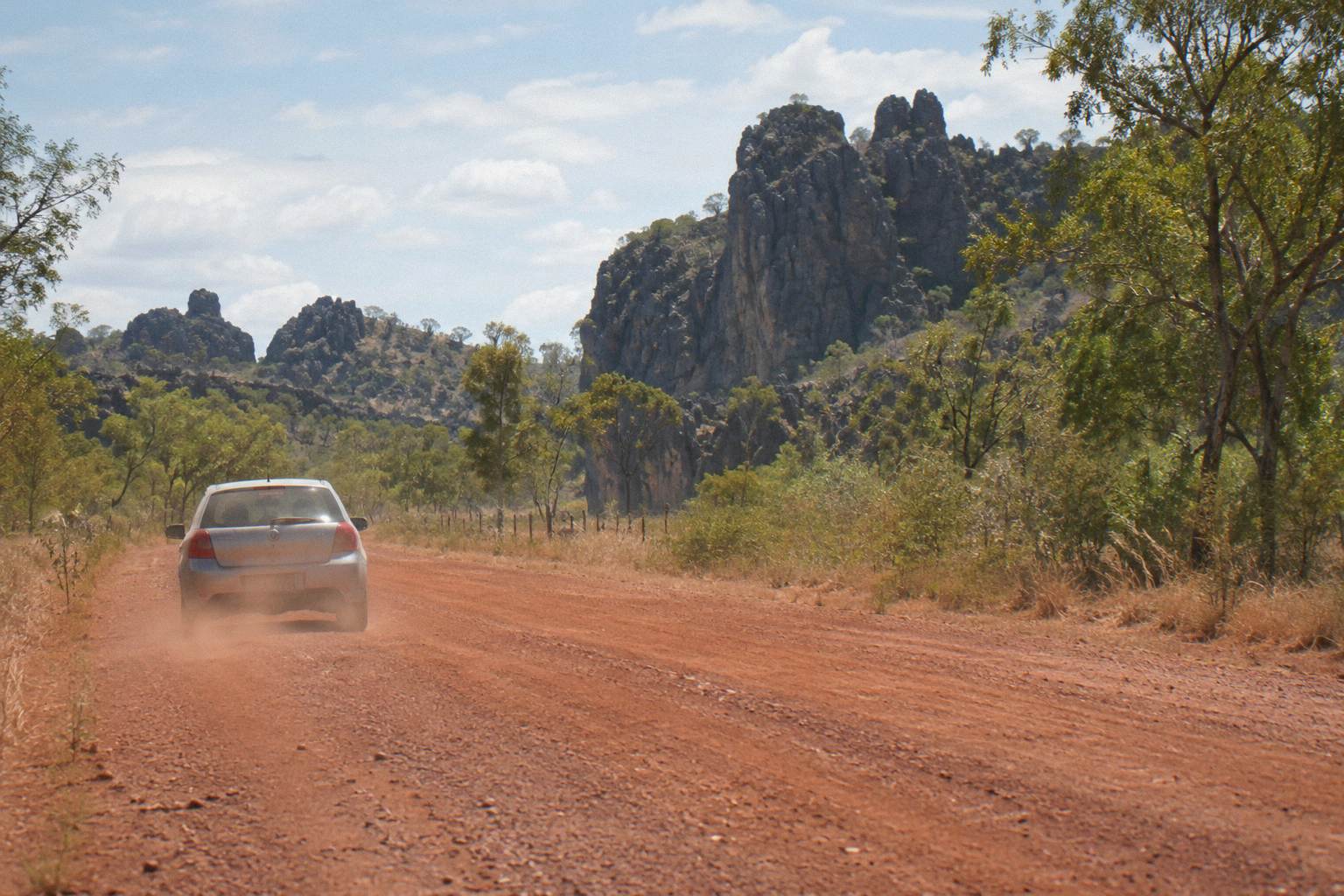
No, the road to Chillagoe is not sealed all the way. It is sealed as far as the small township of Almaden, and the final stretch of about 32 km has both sealed and unsealed sections. A conventional vehicle is fine in dry weather, but in the wet season, December to the end of March, roads may be impassable, and the drive from Cairns covers about 200 km and takes roughly 3 hours each way.
That single fact drives most of the planning decisions around a Chillagoe trip. People picture an outback odyssey with creek crossings and corrugations for hour after hour, and the reality is milder: the bulk of the drive from Cairns is bitumen through the Tablelands and across the savannah, and only the last leg into town is mixed surface. On a dry-season day, a rental hatchback makes it. On a wet-season week, the same road can close, and no vehicle type solves that.
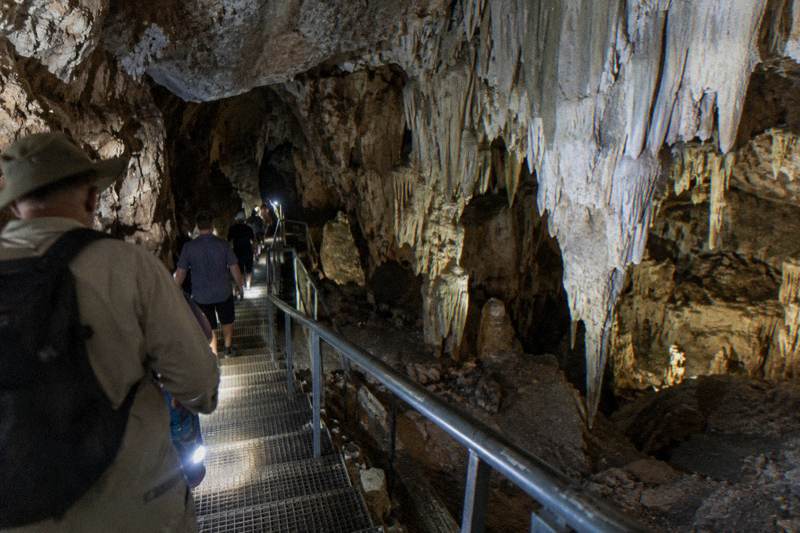
The alternative is to not drive at all. The Chillagoe Caves Tour site exists because plenty of visitors weigh exactly this choice, and the honest answer is that both options work, they just suit different travellers. If you want the cave tour, the smelters, and a pub lunch without thinking about gravel, fuel or road alerts, a day tour handles it. If you like the drive itself, want to set your own pace at Wullumba or Balancing Rock, or are staying overnight in town, self-driving is straightforward in the dry.
The tour that frames this article is the Chillagoe Caves And Outback Day Tour, Billy Tea Safaris' 11-hour trip from Cairns, from A$239 per adult, rated 4.6 from 224 reviews. It runs Monday, Wednesday and Friday only, and it exists largely because of the road question: a lot of travellers would rather ride an air-conditioned 4WD over that last stretch than pilot their own car across it.
How Far Is Chillagoe From Cairns, And How Long Does The Drive Take?
Chillagoe sits about 200 km west-south-west of Cairns by road, roughly a 3-hour drive in good conditions without long stops. The park's own guidance gives the distance as about 215 km, and the town recorded a population of just 214 at the 2021 census, which tells you how quickly the country empties out once you leave the Tablelands behind. Plan on a full day either way.
Those numbers matter more than they look. A 3-hour drive each way means 6 hours behind the wheel for a day trip, before you have spent any time at the caves, the smelters or the pub. Add a ranger-guided cave tour of an hour or more, a look at the Balancing Rock walk, and lunch, and the day is gone. This is why the commercial day tours run about 11 hours door to door: that is simply what the distance costs.
The route climbs from Cairns through the Atherton Tablelands, passes Mareeba, and heads out into savannah country. It is 142 km west-south-west of Mareeba to Chillagoe. For most of that distance you are on sealed highway and regional road, passing papaya and mango country near Mareeba before the trees thin out and the limestone bluffs start. If the drive itself appeals to you, our piece on the Cairns to Chillagoe driving route breaks the Mareeba leg down in more detail.
For context on how empty the region is, Wikipedia's page on Chillagoe records the locality at 2,205.8 square kilometres with those 214 residents, and notes the Chillagoe-Mungana area holds 600 to 1,000 caves. You are not driving to a busy tourist strip; you are driving to a small outback town surrounded by a national park established in 1995.
The limestone itself is the reason there is anything to visit at all. Scientists believe the landscape around Chillagoe began to form about 400 million years ago, when limestone was deposited as calcareous mud and coral reefs on the bed of a shallow sea where Chillagoe is today. Those ancient reefs are now the towers and caves that draw people over the mixed-surface road, which is a nice symmetry: the harder the destination was to reach geologically, the more effort it asks of you to reach it today.
Time your departure around daylight rather than a clock. The drive is at its best in morning light, and wildlife on the road, cattle, kangaroos, wallabies, is far less of a hazard before the crepuscular hours begin. Leaving Cairns by 8 am gets you to Chillagoe for a late-morning cave tour, leaves the afternoon for the smelters and Balancing Rock, and gets you back over the gravel section in daylight. Leaving at midday does none of those things.
What Is The Last 32 Kilometres Actually Like?
After Almaden, the final stretch of about 32 km has sealed and unsealed sections, with some sources noting roughly 3 km of unsealed surface. It is station-country road, not 4WD-only track: a conventional vehicle is fine in dry weather. The surface can be corrugated, dusty or loose gravel in patches, so the last half hour is slower than the bitumen before it.
Almaden is the marker to remember. Everything up to that point is sealed. From there, the road alternates: some sections have been bitumenised, others remain gravel or a patchwork, and the exact mix shifts as sections get upgraded, which is why stating current conditions is a mug's game. What is stable is the character: wide, mostly flat road through open country, with road trains possible and wildlife at dusk.
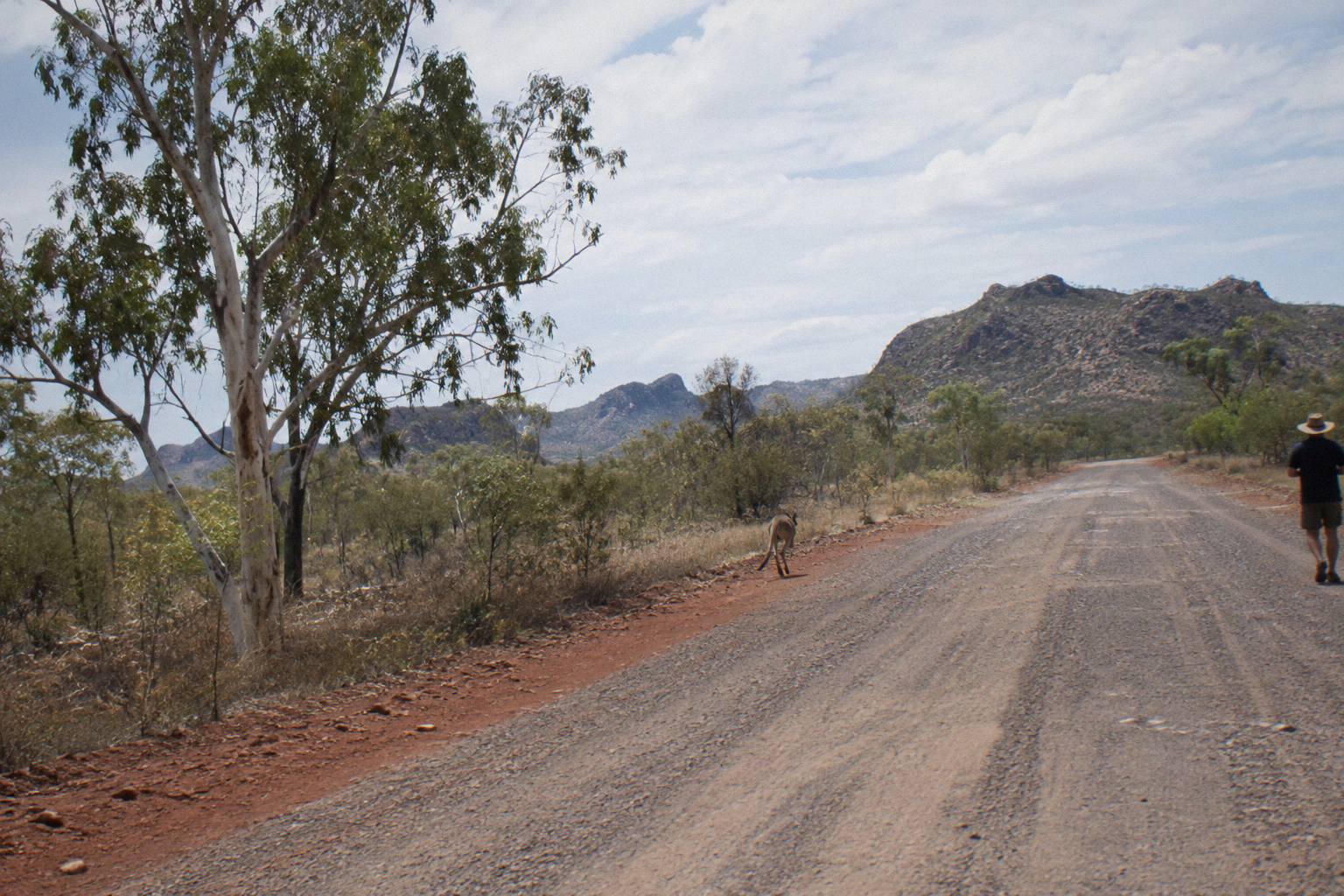
The practical rules for that stretch are ordinary outback driving rules. Slow down on gravel, keep left on crests, allow extra braking distance, and watch for stock and kangaroos, especially early and late in the day. If it has rained recently, the unsealed parts can become slippery or wash out, and that is the scenario where a small car stops being the right tool. Our longer discussion of whether a small car can make the drive covers the vehicle question in depth.
Here is the road picture by stage, using only what the park service states:
| Stage | Surface | What to expect |
|---|---|---|
| Cairns to Mareeba | Sealed | Highway and regional road through the Tablelands |
| Mareeba to Almaden | Sealed | Savannah country, services get sparse after Mareeba |
| Almaden to Chillagoe | Mixed sealed and unsealed | Final stretch of about 32 km, some unsealed sections, slow down on gravel |
| Wet season, December to end of March | Variable | Roads may be impassable regardless of vehicle |
One thing worth knowing that first-page search results rarely mention: because the road mix changes as upgrade works happen, any article, forum thread or map layer describing the surface in detail can be out of date within a season. The park service's Chillagoe-Mungana Caves National Park pages are the reference to check before you set off, and road condition reports matter more than blog descriptions.
A note on what "unsealed" does not mean here. It does not mean dune fields, rocky steps or river fords; it means gravel and dirt sections on a formed road that carries locals, mining traffic and tour buses every week. If you have driven unsealed roads anywhere in regional Australia, this stretch will feel familiar. If you never have, it will feel like the first twenty minutes of an outback driving education, delivered at low speed, which is exactly how it should be delivered.
Can You Drive To Chillagoe In A Normal Car?
Yes, in dry weather a conventional vehicle, an ordinary 2WD sedan or hatchback, is fine for the drive to Chillagoe. The park service says exactly that. You do not need a 4WD, and the unsealed sections are short and generally maintained. What you do need is dry conditions, sensible speeds on gravel, and a fuel plan, because the last towns are small and services are limited.
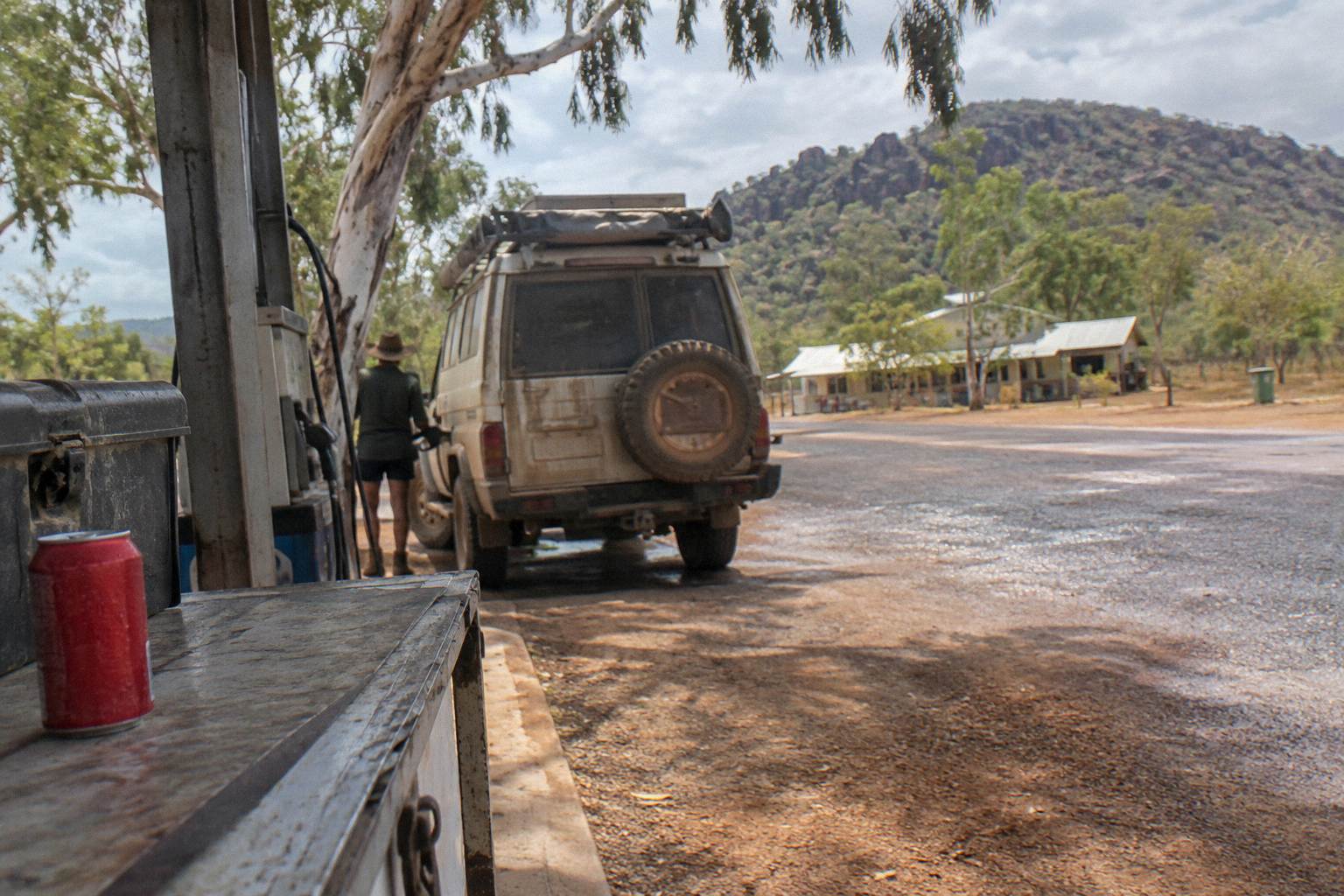
The word "fine" carries conditions. Corrugations shake small cars hard at speed, and the safest approach on gravel is to drop your speed well below the sealed-road limit and accept the extra minutes. Dust from oncoming traffic can cut visibility to nothing for several seconds, so switch headlights on and pull left when you see it coming. And because the final 32 km has no services worth relying on, fill up in Mareeba rather than gambling on Almaden.
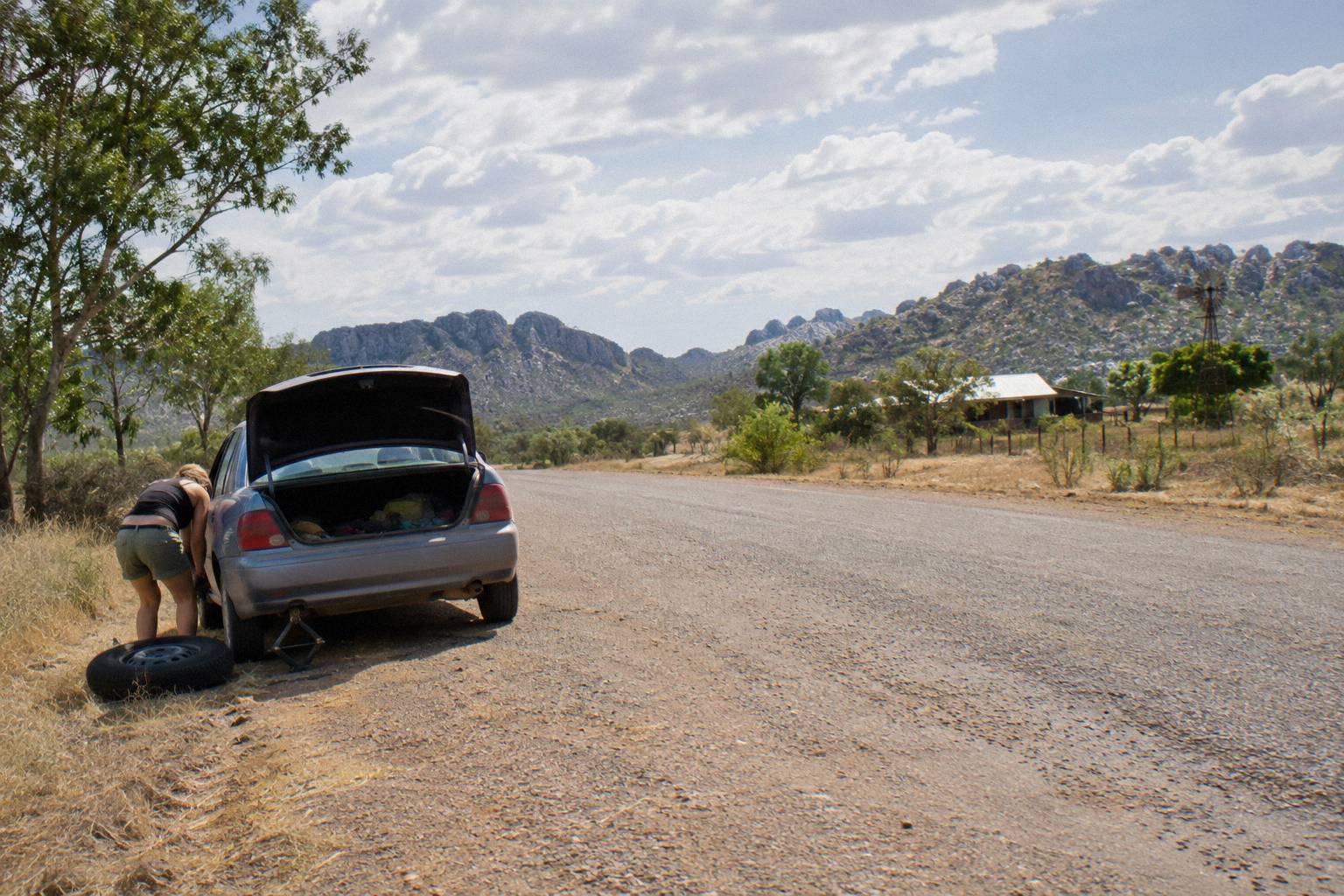
Tyres are the most common self-inflicted problem. Gravel edges and roadside rock can puncture a tyre, so check pressures before the trip and know where your spare and jack are. If you are in a rental, tell the company you are heading to Chillagoe: some rental agreements restrict unsealed roads, and that restriction is a paperwork matter, not a driving-skill one. It is the kind of detail worth settling well before you are most of the way to Chillagoe with a flat and a contract that does not cover you.
Timing matters as much as machinery. The sealed majority of the route is comfortable at any hour, but the unsealed tail is best crossed in full daylight with dry surfaces, which argues for an early start and a departure from Chillagoe before the light goes.
For travellers who would rather not have the conversation at all, the tour option removes it. Billy Tea Safaris runs the day trip in an air-conditioned 4WD vehicle carrying up to 19 travellers, with Cairns City hotel pickup around 6:45 to 7:00 am and return in the evening, from A$239 per adult. The driver handles the surface, the fuel and the timing; you handle the view. Free cancellation up to 24 hours applies on the booking page, which softens the commitment if the forecast turns.
When Is The Road To Chillagoe Impassable?
The wet season runs December to the end of March, and during it the roads to Chillagoe may be impassable. The region averages about 850 mm of rain a year, most of it falling in those months, and summer temperatures typically sit between 25 and 35 °C. No vehicle class guarantees passage when the roads are closed.
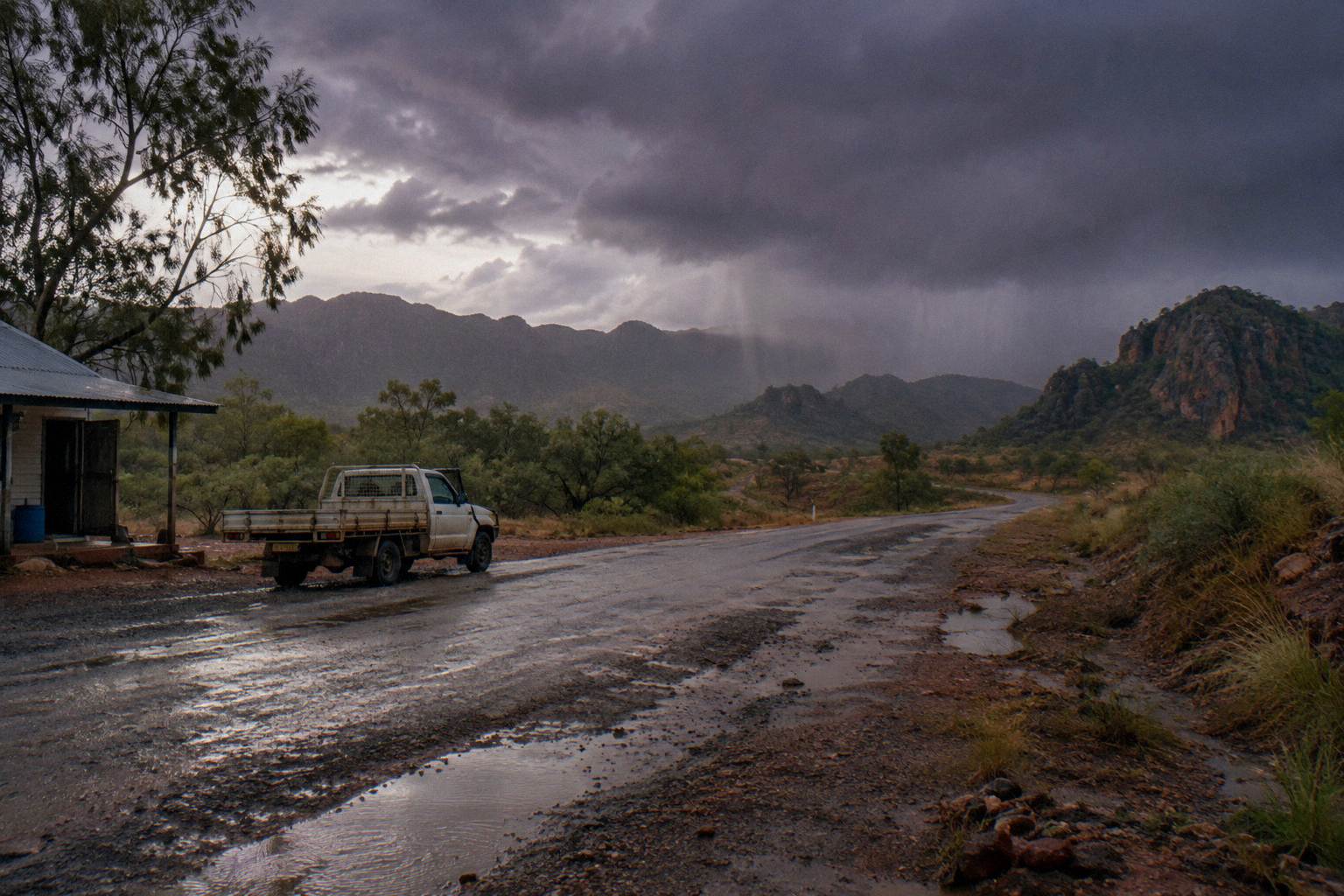
This is the one genuine hard constraint on a Chillagoe trip. The dry-season question, sealed or not, has a comfortable answer. The wet-season question does not: when rain closes the road, it closes it for everyone, and a day planned around a booked cave tour can collapse. The park service's visiting-safely guidance is blunt about it, and it is the reason the shoulder months, roughly April through November, are when most trips happen.
If you are travelling in the wet season, build slack into the plan. Check road conditions the day before and the morning of, treat any cave booking as changeable, and have a Tablelands fallback. Our month-by-month breakdown of Chillagoe weather and timing works through the calendar in detail if your dates are flexible.
It also affects the tour decision differently than the self-drive decision. A self-driver caught out loses the day and the fuel; a tour passenger at least has the operator making the call on conditions, with hotel pickup logistics already handled. Neither is immune to a closure, but only one of them has you personally reading road reports at 6 am. The tour departs Monday, Wednesday and Friday only, so a storm scrubbing a Wednesday means your next chance is Friday, a detail worth knowing when you build the itinerary.
Self-Drive Or Tour: Which One Suits You?
Self-drive suits travellers who want flexibility, an overnight stay in Chillagoe township, or the drive as part of the experience, and it costs less per vehicle in the dry season. A tour suits anyone who wants the ranger cave tour, the smelters, lunch and the drive itself handled in one 11-hour day, from A$239 per adult, with no gravel, fuel or road-report decisions to make.
The honest comparison looks like this:
| Self-drive | Day tour from Cairns | |
|---|---|---|
| Road decisions | Yours, including the last 32 km | Driver's problem |
| Cave tour | Book direct with the park ranger service | Included, about one hour |
| Timing | Your pace, stops where you like | Fixed itinerary, about 11 hours |
| Departure days | Any day the road is open | Monday, Wednesday and Friday only |
| Cost shape | Vehicle, fuel, cave fees, lunch | From A$239 per adult, lunch and cave tour included |
| Overnight option | Yes, stay in Chillagoe township | No, returns to Cairns same evening |
Two notes on that table. First, park cave fees: the ranger tours at Donna, Trezkinn and Royal Arch caves are sold direct by the park service, and fee amounts are single-source, so "fees apply" is all that can be printed; the official cave tours page lists the categories. Second, on the tour side, check the booking page for the park fee wording, because the operator's pages are not consistent on whether it is included.
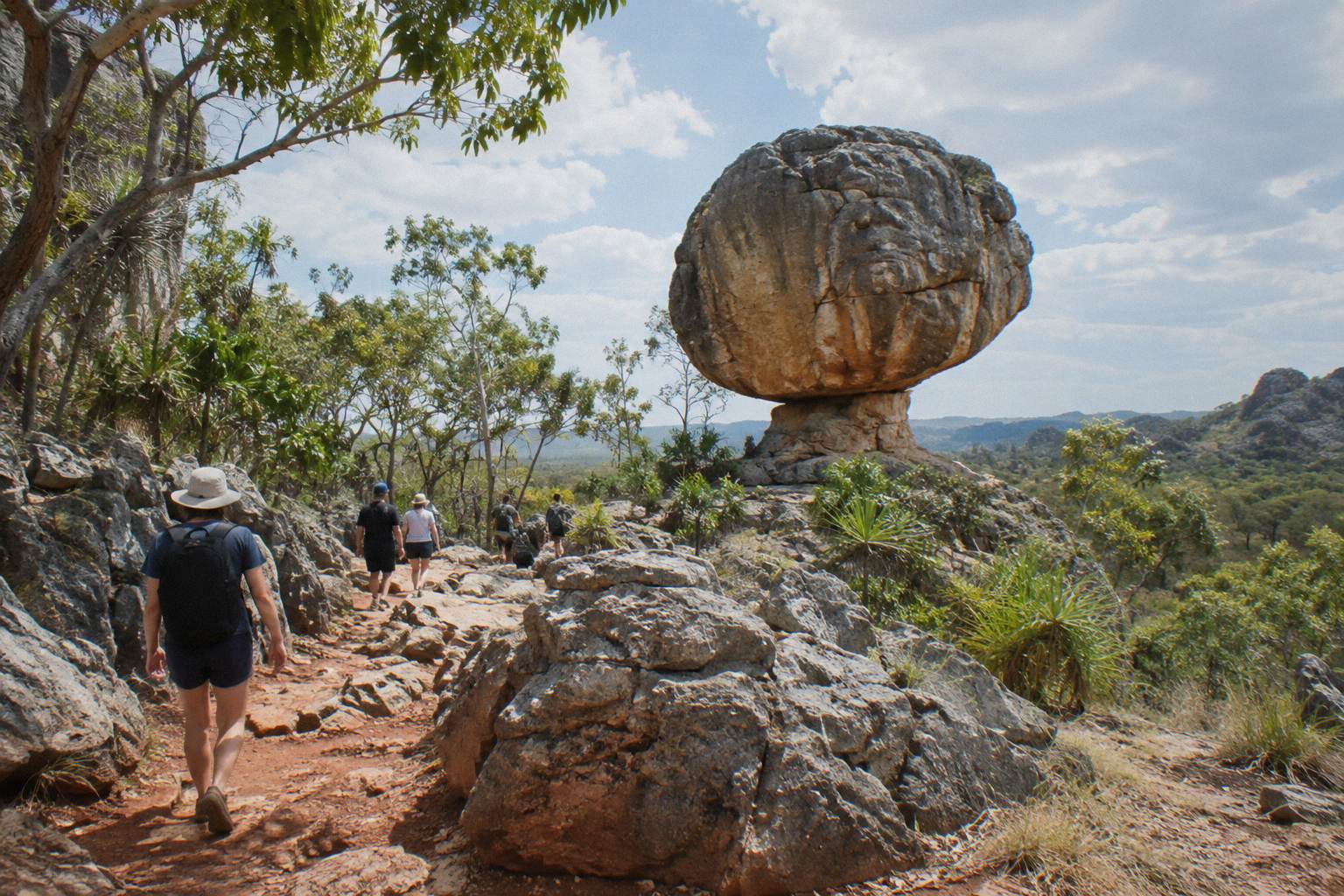
If you lean toward the tour, it helps to know the shape of the day. Pickup in Cairns City runs around 6:45 to 7:00 am, with Port Douglas and Northern Beaches pickups costing extra and Southside guests meeting at 287 Draper St, Parramatta Park. The bus stops for morning tea at a papaya plantation cafe near Mareeba, then drives out to Chillagoe, where the day includes the ranger-guided cave tour of about an hour, the smelter ruins, lunch at the Chillagoe pub, Balancing Rock, the Wullumba rock art site, and Granite Gorge Nature Park on the way back for the rock wallabies. Children 4 to 16 are welcome, under-4s are not catered for, and the operator asks for closed shoes and reasonable fitness for the cave, which has a few confined spaces, steps and uneven ground.
There is also a middle path worth naming: stretch the trip. Billy Tea Safaris sells the same outback day inside a 2-Day Daintree Rainforest And Outback Tour, from A$430 per adult, pairing a rainforest day with the Chillagoe outback day, with return transfers from Cairns, Northern Beaches and Port Douglas on the rainforest day. Reviews for it are on the booking page.
The same operator also folds the outback day into a 3-Day Reef, Rainforest And Outback Package, from A$620 per adult, which adds a reef day, though you make your own way to the Reef Fleet Terminal for that leg. All three are one operator's options, not rival products, and all three share the same cave-and-smelters outback day and the same free cancellation up to 24 hours on the booking page. Reviews are on the booking page.
One caution that trips up bargain hunters: the Tablelands day tours you will see while searching, like the Atherton Tablelands Lakes, Waterfalls And Rainforest Day Tour from A$187 per adult or the Atherton Crystal Caves Self-Guided Tour from A$25, do not visit Chillagoe at all. The Crystal Caves is an Atherton attraction, not the Chillagoe cave system, and the price gap makes it look like a substitute when it is a different day out entirely. If your goal is the limestone caves at Chillagoe, read the itinerary before you book anything cheap.
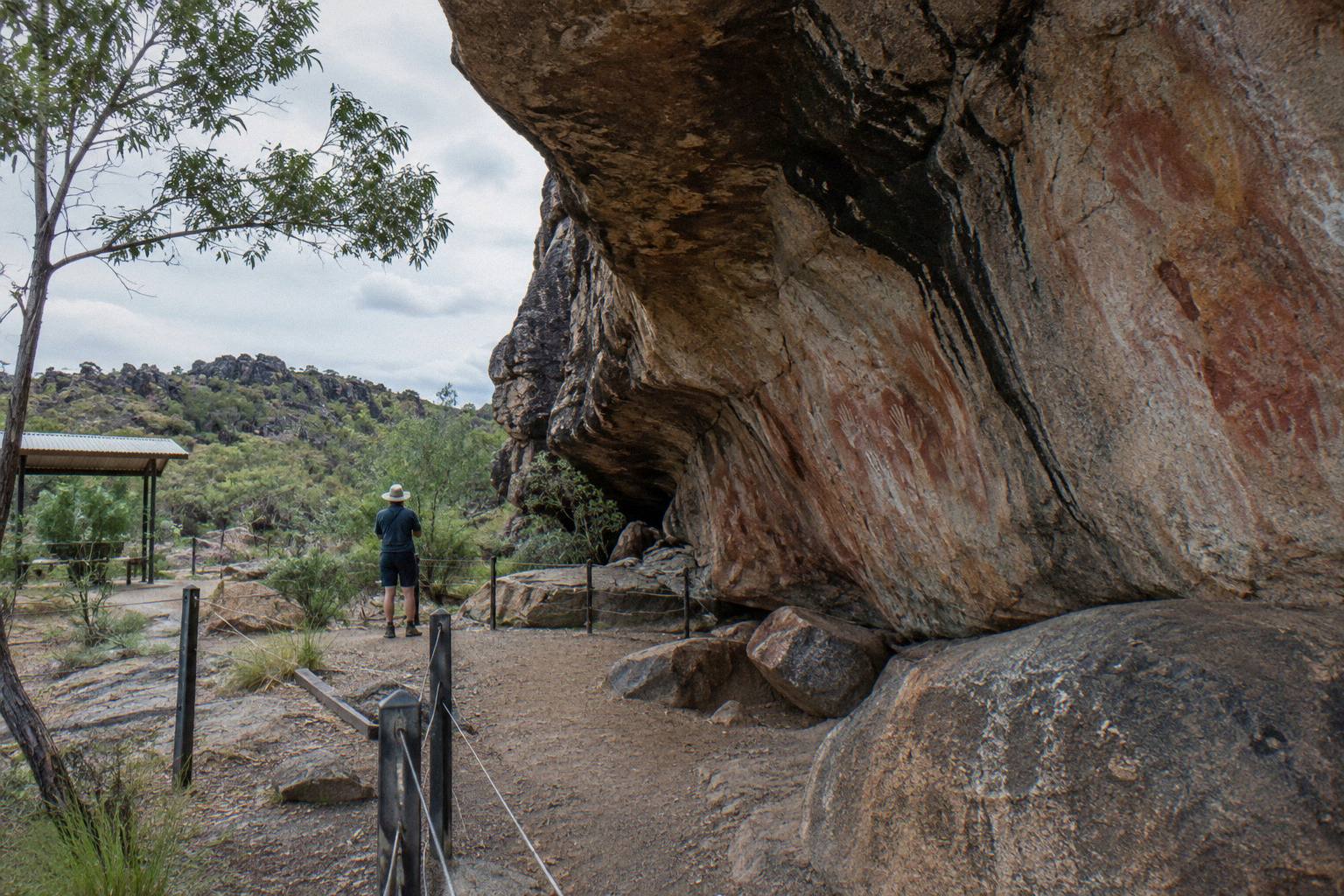
So the decision usually comes down to two questions. Are you travelling in the dry months, and do you actually want the drive? Answer yes to both and self-driving gives you the richer day: a stop wherever the light is good, an unhurried look at the rock art, and the option to sleep in Chillagoe and do a second ranger cave tour the next morning. Answer no to either and the tour from A$239 is the stress-free version of the same country, driven by someone who runs that road every week it operates.
Common Questions About The Road To Chillagoe
Is The Road To Chillagoe Sealed All The Way?
No. It is sealed to Almaden, and the final stretch of about 32 km has sealed and unsealed sections. Never assume a fully sealed run; plan for gravel in the last half hour.
Is The Road To Chillagoe Sealed? Self-Drive Or Tour
Sealed to Almaden, mixed surface for the last 32 km, fine for a conventional car in dry weather. Self-drive if you want flexibility or an overnight stay; take the tour if you want the drive, the cave tour and lunch handled in one 11-hour day.
How Long Does It Take To Drive From Cairns To Chillagoe?
About 200 km and roughly 3 hours in good conditions, without long stops. The park service gives about 215 km. A day trip means around 6 hours of total driving, which is why commercial tours run about 11 hours door to door.
Do I Need A 4WD To Get To Chillagoe?
No. The park service states a conventional vehicle is fine in dry weather. Slow down on the unsealed sections, watch for wildlife and dust, and fill up with fuel in Mareeba before the final stretch.
When Might The Road Be Closed?
In the wet season, December to the end of March, roads may be impassable. Check the park alerts and road condition reports before departing in those months, and consider travelling April through November instead.
Can I Stay Overnight In Chillagoe Instead Of Day-Tripping?
Yes, and it is a good way to break up the drive. Camping is not permitted in the national park itself, so accommodation means staying in Chillagoe township.